
Managed, Not Witnessed
You shared your medical experiences, I listened

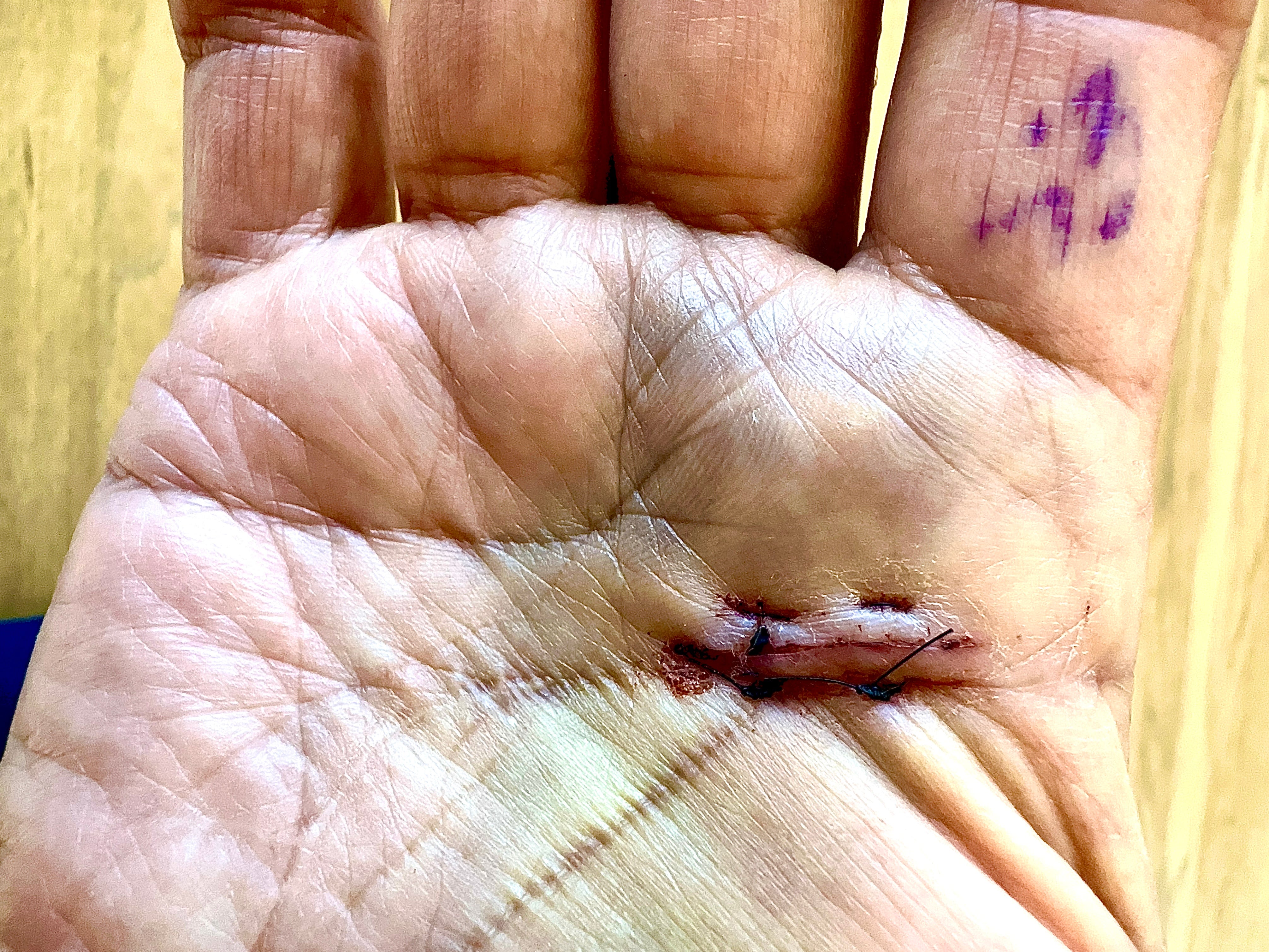
I wrote about my surgery last week. I asked to be kept informed. I asked not to be left in the dark. I wanted to be present for what was happening to my own body. I was asking to be a witness to my own experience. That agreement was quietly broken.
I wrote about the difference between being managed and being met. I didn’t expect what came back.
Thirty thousand people read the piece. Hundreds responded. I am sharing some of what you wrote — without names, with only small edits for length — because these voices deserve to be heard together.
But first — for those who didn’t read the original piece — here is what happened, and why it matters.
What happened in that room
Before my surgery I asked the surgeon to narrate what he was doing as he went. He agreed. He told me the injection would feel like a stick and last ten seconds.
My whole hand lit up — burning, pain spreading through the hand for almost a minute. When it finally stopped I said: it felt like you gave me two injections in two different places. He said: no, only one.
I held my ground. Eventually he explained that while the needle was in, he had moved it to cover two different sites. One needle, two locations, two distinct waves of pain — exactly what I had felt.
What I wanted him to say: Yes. One needle, two sites. That’s exactly what you felt.
Three sentences. Everything confirmed. Instead his first word was no — which immediately positioned me as wrong. Only when I pushed did the fuller truth arrive, dressed as explanation.
Then I waited for him to tell me he was making the incision — cutting open my hand to expose the sheath and tendon. Ten minutes later I heard: Almost done. I’m cleaning out the sheath now.
The cutting had come and gone without me.
I came home angry. Not at his hands. At something else.
This is what I am calling the information float — the gap that opens when what is communicated doesn’t match what is actually happening. When you lose the facts and the relationship at the same time. When you’re no longer sure what literally happened and no longer sure who you’re with. When you wonder: was I told the truth, or was I managed?
That gap doesn’t close when you leave the room. It follows you home as distrust, as anxiety, as leftover questions — what really happened in there? It keeps some people from going back to doctors at all. It confirms what too many people already believe: that their perceptions can’t be trusted, that their experience doesn’t matter, that the one in the white coat knows what happened in your body better than you do.
That is how the gap becomes a wound.
And then you wrote back. Doctors and nurses. Patients who had never found words for something that happened years ago. Women whose bodies had been entered and altered without narration or consent. A man who had surgery at four and carried the anger for decades. Practitioners who recognized themselves and wanted to do better.
The ones who feel the gap are everywhere.
This is yours as much as mine now.
The practitioners who recognized something
As a pediatric nurse of almost 30 years, I’ve always strived to witness my little patients with validation. The little girl patient in me was so often managed, often abruptly, and very rarely truly witnessed, leaving marks.
I work as a doctor and this inspires me to deepen my own embodiment practice so I can be more fully present and truly meet the human beings in front of me — seeing them as powerful and sovereign beings.
Being a nurse, I really appreciate this and it confirms why I value telling awake patients what we are doing and what’s happening. Basic respect and dignity.
I always ask if my patients want narration or explanation as I work. Some don’t, but most do. It rekindles agency in a place that feels dark and frightening.
My dentist does that: tells me what he is going to do — and also while he is working, lets me know what is happening. I can follow, and can be prepared for pain.
The long cost — those who were harmed and never went back
Over 20 years ago I had a similar experience in the context of female reproductive care. I explained my history of sexual violence and asked for slowness and narration before each step. My request fell on deaf ears, along with my expression of physical pain. The experience felt like an assault. I have never been able to go back.
Last week I saw a periodontist who knew I was phobic and was so patronizing — accurate in his diagnosis but got the tone so wrong. I left. I saw a new periodontist this week. Similar prognosis. Twice the price. Knew exactly how to deliver treatment with kindness and detail.
A surgeon shamed me on the operating table for being anxious and scared. He told me other patients would have welcomed the surgery appointment I was occupying. I jumped off the operating table and ran away. As I waited outside, I saw him speeding past on his way back to his office. He left me holding the shame.
Women’s bodies
I had a biopsy of the womb with no narration and no anesthetic. Just — one second before — I’m just going to take a quick biopsy. It felt very much like an assault. There is so much research on how, if we have understanding and feel held in the moment of trauma, it becomes an experience — not trauma.
I support women who are in surgical menopause. Having your reproductive organs removed without any proper conversation is just awful. As a therapist, I hear it time and time again.
I work with women who had traumatic cesarean births. If doctors and support staff did this, it would change everything for us.
My second C-section was planned. The doctor was explaining everything to two students, and at one point I said — it’s also for me. It helps a lot to hear what you’re doing. With that, she narrated everything for both of us. It was such a helpful, healing experience.
You’ve captured how women feel in the doctor’s office and surgery every single time. Our perceptions are. Always. Invalid.
Children
My youngest son had to go to the hospital. He point blank refused to be treated. A female doctor came in and told him he could just sit with her a while and look around the room. She assured him she wasn’t going to do anything to him. After about fifteen minutes she asked if there was anything cool in the room he wanted to know about. He picked up dozens of apparatus and she explained each one. After a while she said — can I use that one to look in your ear? My son was as calm as I’ve ever seen him.
I had abdominal surgery at four. No one said anything going in — or why. I came out of it angry at the doctor, whom I never saw until I was ten. I still felt the anger then. The surgery maimed me for life and led to lifelong disabilities. I later found out it was basically experimental — never done on a child so young — and it turned out it wasn’t even really necessary. Only somatic trauma work has started returning me to my body.
Finding words for the first time
I’ve never had words for my experience with a surgeon until now.
Thank you for unpacking the communication and interpersonal consequences. It helped me to understand my distrust.
I always blamed myself for being too sensitive. You empower me so much.
I want to take this post in to show the doctor. Maybe they will take it more seriously knowing a man wrote it.
That’s been my whole life right there.
A closing note
The ones who feel the gap are not rare. They are not fragile. They are not oversensitive.
They are paying attention.
And they have been waiting — some of them for decades — for someone to confirm that what they felt was real.
Confirmation of accurate perception is medicine.
Thank you for writing back.
The truth and tenderness of this statement “Confirmation of accurate perception is medicine.” have me in tears! 😭 So freaking true! ❤️